
You Don't Have to White-Knuckle It
July 2026 | Episode 016
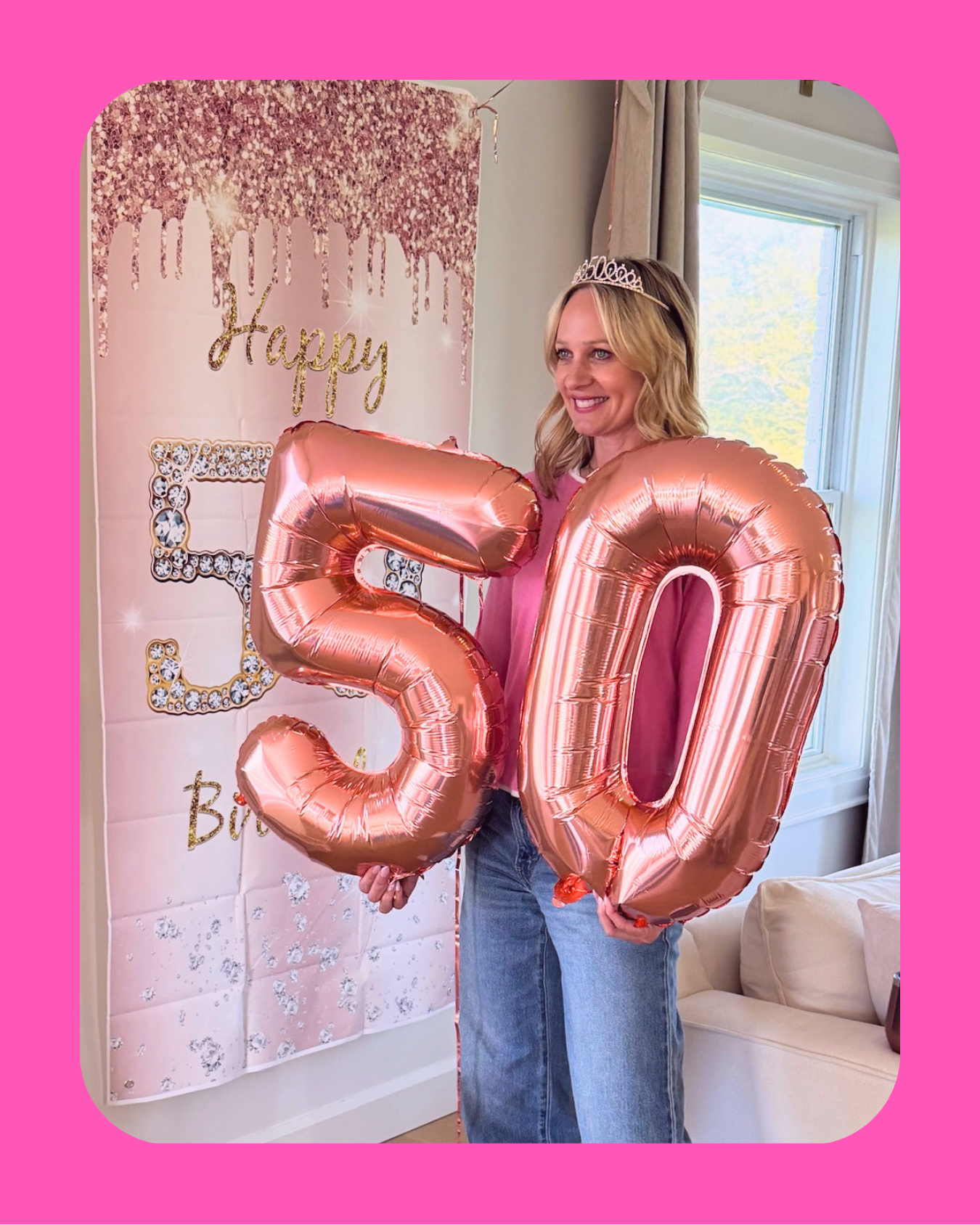
What turning 50 is teaching me about resilience.
This month, I turn 50. I've been sitting with that more than I expected to.
I'm not dreading it at all. In fact, I'm feeling so grateful! But I've taken a natural pause to look back, look forward, and ask myself some honest questions about how I want to live the next chapter.
One of the things that keeps coming up for me is resilience. I don't talk about enough, but stress is something I've genuinely had to work at managing my whole life. And what I've noticed, over and over again, is that my lowest moments of resilience aren't random. They show up when my stress is highest and when I've stopped seeing reality clearly, when my expectations of myself are unrealistic, when I'm quietly comparing myself to standards I made up, and when I've lost touch with what's actually within my control.
I think a lot of us are in that space right now.
The world is feeling pretty uncertain. The demands feel endless. And most of us are carrying more emotionally than we ever say out loud.
During times like these, we need to tap into our capacity for resilience.
What Resilience Actually Is
One of the biggest myths about resilience is that some people simply have it and others don't. But research tells us something much more hopeful: resilience is a set of learnable skills.
Resilience isn't rebounding. That phrase implies returning to who you were before. Having resilience means that you can integrate hard experiences into your life story and carry them forward with wisdom rather than pretending they never happened.
Resilience is not toxic positivity. It's not pretending everything is fine when it isn't. True resilience holds two things at once: hope and honesty. The ability to stay solution-focused and see your situation clearly.
The Optimism–Reality Balance
In emotional intelligence, optimism is the capacity to stay hopeful and forward-focused even when things are hard.
Research consistently shows that optimism helps people cope better, recover faster, and perform stronger long-term.
But, and this is where I've had to do my own growing, optimism without reality-testing becomes denial.
Over the last few years, I realized I was holding myself to standards that weren't necessarily achievable. In my business, in leadership, in family life. I was comparing myself to an impossible version of myself and then wondering why I felt depleted.
The problem was a lack of compassion and realism toward myself.
Resilience asks us to pause and honestly ask:
Are my expectations actually achievable right now?
Am I comparing myself fairly?
What is truly within my control?
Sometimes the most resilient thing we can do is recalibrate what enough actually looks like.
What Chronic Stress Does to Us
Stress itself isn't the enemy. Our bodies are designed to handle it in short bursts. But chronic, unmanaged stress changes us emotionally, mentally, and physically.
And leaders, in particular, tend to carry that stress silently.
I recently came across the work of Dr. Jody Carrington, who wrote Feeling Seen, and something she said stopped me in my tracks: "You matter first. Not because you hold the title. But because regulated leaders regulate rooms. And if you want steady teams, you start with a steady nervous system."
That doesn't mean you can never feel overwhelmed again. It means learning to work with your emotions rather than against them and using positive emotions to bounce back from negative emotional experiences.
And it's one of the most important leadership skills of our time.
What Actually Builds Resilience
Resilience looks like maintaining relationships that genuinely restore you, managing stress before it accumulates, asking for support instead of white-knuckling it, and reconnecting to your sense of purpose. And prioritizing connection - I cannot say this enough! This is one of the greatest protective factors for resilience we have.
My grandmother passed away recently at nearly 100. She was living proof that a long, full life is possible. But watching her, I came to believe that some of the biggest threats to our wellbeing are isolation and chronic stress, building slowly over time.
We are not meant to navigate life alone.
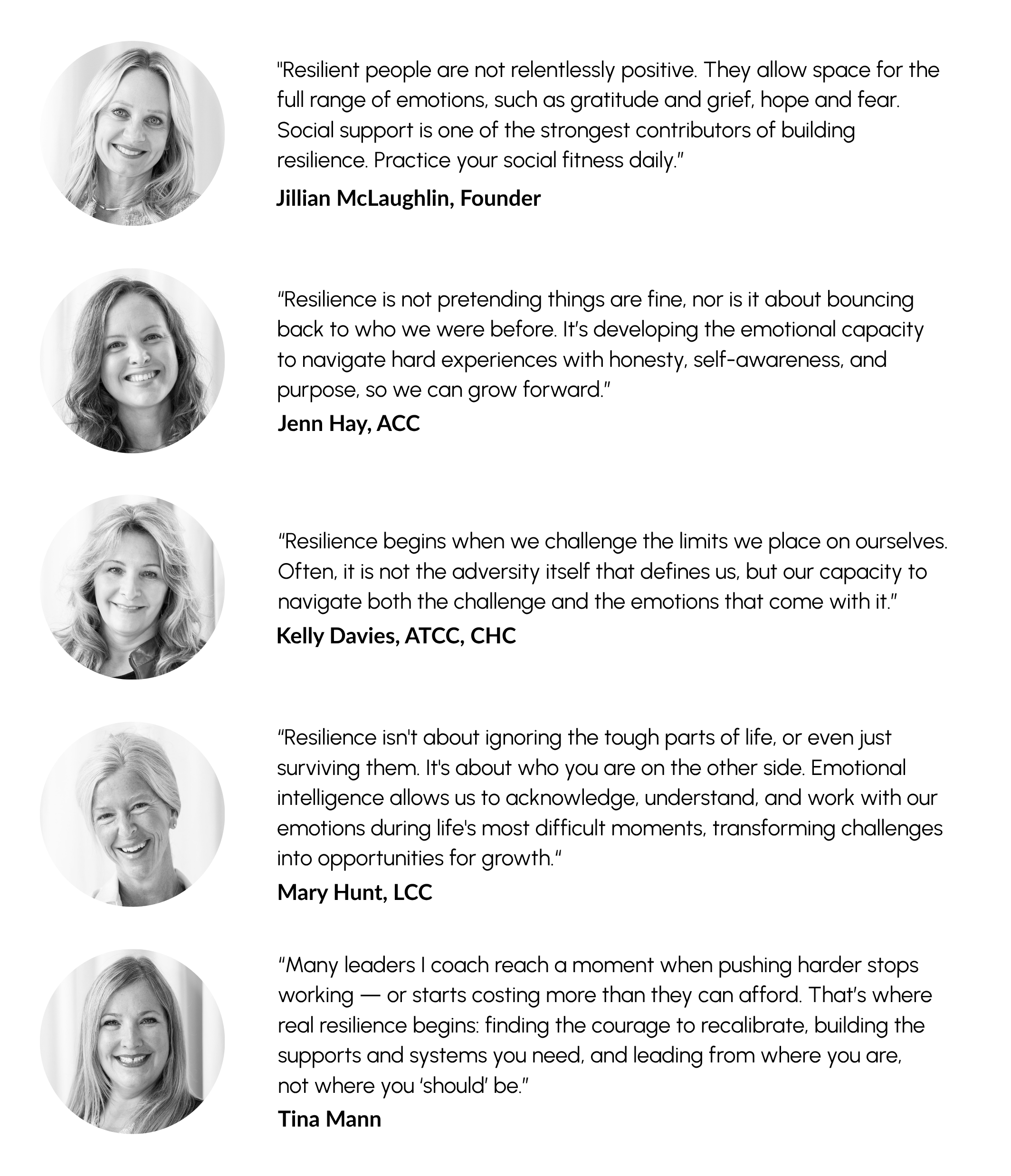
Bite-Sized Wisdom for Big Impact from Our Coaches
A Final Thought
As I step into this next phase of my life, I'm realizing that resilience comes down to alignment.
It's about building a life that sustains your energy instead of draining it. Staying connected to the people who matter. Continuing to grow, without constantly running yourself into the ground to prove something.
That's the invitation I'm sitting with at 50. And maybe it's one for all of us right now.
Not to become invincible, just to become more aware and more connected in how we care for ourselves, and for each other.
With optimism,
Jillian & Team
McLaughlin Mentoring Inc.