
November 2026 | Episode 020

Why effective leaders adapt how they communicate, rather than expecting everyone else to.
Have you ever left a conversation wondering why your message didn't land, despite being perfectly clear in your own mind?
We all have preferred ways of communicating. Some of us want to get straight to the point, while others need time to process, talk things through or understand the bigger picture.
The challenge is that we often communicate with others in the way we prefer to be communicated with.
But effective communication isn't just about what you say. It's about understanding who's listening and how they're most likely to receive it.
One Message, Four Different Styles
One of the most useful applications of a DISC assessment is understanding how different behavioural styles influence communication. While we're all a blend, we tend to have preferences that shape how we give and receive information.
D | Dominance: Values results, efficiency and directness. Get to the point, focus on outcomes and offer solutions.
I | Influence: Values connection, enthusiasm and collaboration. Make space for conversation, share ideas and invite participation.
S | Steadiness: Values trust, consistency and cooperation. Be thoughtful, provide context and allow time to process.
C | Conscientiousness: Values accuracy, logic and detail. Bring the facts, be specific and allow time for consideration.
Of course, these aren't fixed personality types. They're preferences that can shift depending on the situation. The goal is simply to become more aware of what helps them engage.
The Shift from Speaking to Connecting
In Supercommunicators (one of my favorite EQ books!) Charles Duhigg explores how meaningful conversations depend on understanding what kind of conversation we're having and connecting with others on their terms.
As leaders, this means moving beyond simply delivering information and becoming more intentional about how it's received.
Before your next important conversation, consider:
Know your default. Are you naturally direct, detail-oriented, collaborative or accommodating? Your strengths can also become blind spots.
Read the room. Does your audience need the big picture, supporting data, reassurance or a clear next step?
Adapt your delivery. Keep your message consistent, but adjust the way you communicate it to meet the needs of the person in front of you.
Sometimes, the most effective thing you can do is simply ask: "What's the most helpful way for me to share this with you?"
A Little Self-Awareness Goes a Long Way
When someone doesn't respond the way we expect, it's easy to assume they're being difficult or disengaged. But what if they're just processing information differently?
Emotional intelligence gives us the opportunity to pause, challenge those assumptions and approach the conversation with curiosity rather than frustration.
The question isn't just, "How can I communicate this more clearly?" but "What does this person need from me to hear it clearly?"
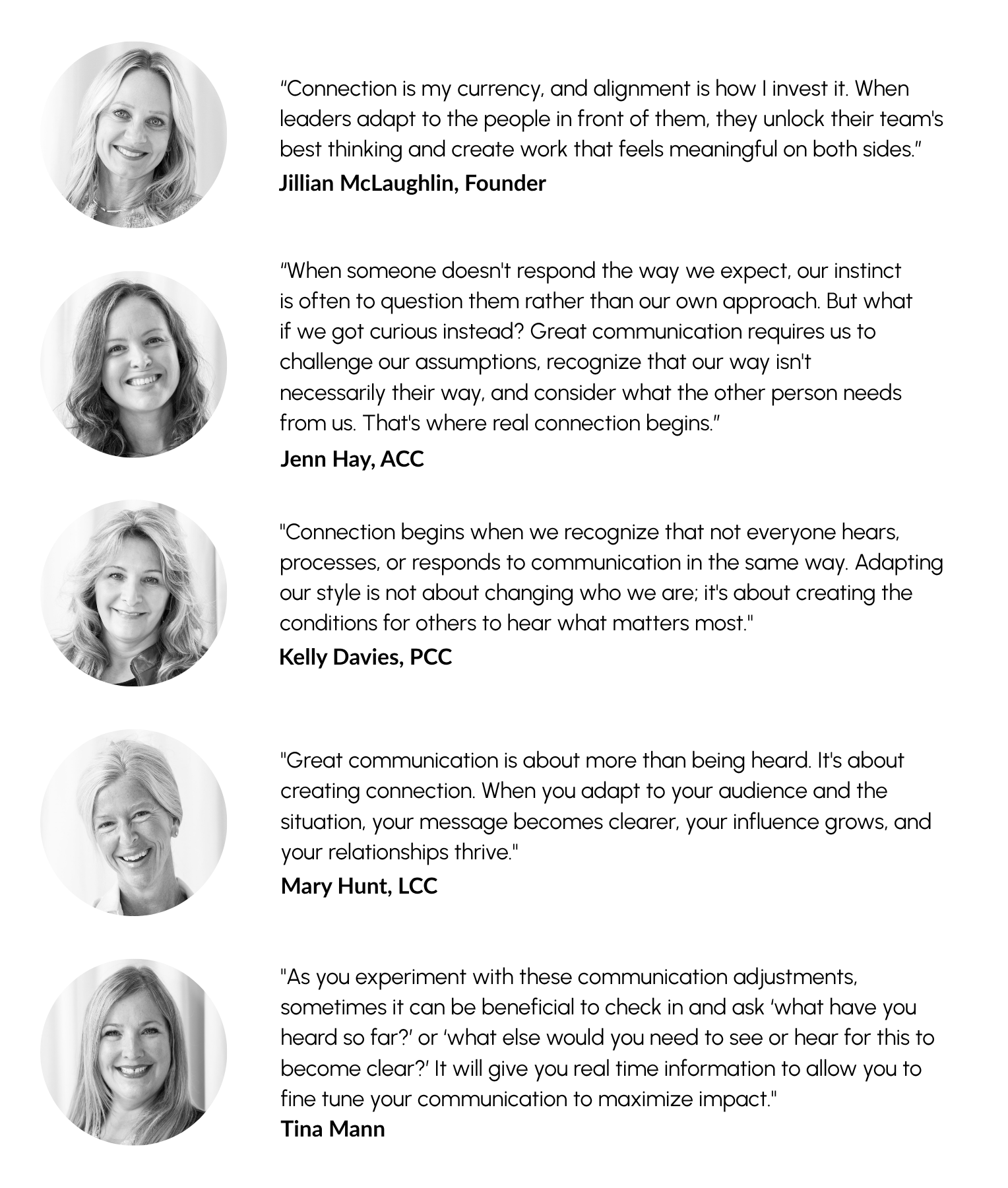
Bite-Sized Wisdom for Big Impact from Our Coaches
The Work Starts With You
Understanding your own communication style is the first step toward becoming a more adaptable leader. The right tools and coaching can help you recognize your patterns, identify blind spots and build stronger connections with the people you lead.
At McLaughlin Mentoring, we use DISC assessments to help leaders better understand themselves and others, strengthen communication and create more effective working relationships.
Curious about your own communication style? Book a discovery call here to learn more.
With optimism,
Jillian & Team
McLaughlin Mentoring Inc.