
Why Positivity Matters More Than Happiness at Work
April 2026 | Episode 013
How leaders can use positivity as a practical tool for performance and connection.
I get asked about happiness at work all the time.
Leaders want to know how to make their teams happier and more engaged, and I understand why. Considering we spend about a third of our lives at work, it’s only natural that we want it to feel fulfilling and meaningful.
But over the years, I’ve noticed something important that often gets overlooked: Happiness is an outcome, while positivity is a practice. And positivity is something leaders can influence every single day, with effort we can change it.
Positivity comes down to intentionally shaping the emotional environment people work in, how we show up, how we respond under pressure, and how we connect with the humans around us.
Positivity Is About How the Brain Functions Under Pressure
Positivity isn’t about being cheerful or burying our head in the sand when challenges arise. It comes down to creating emotional conditions that help people think more clearly and respond well under stress.
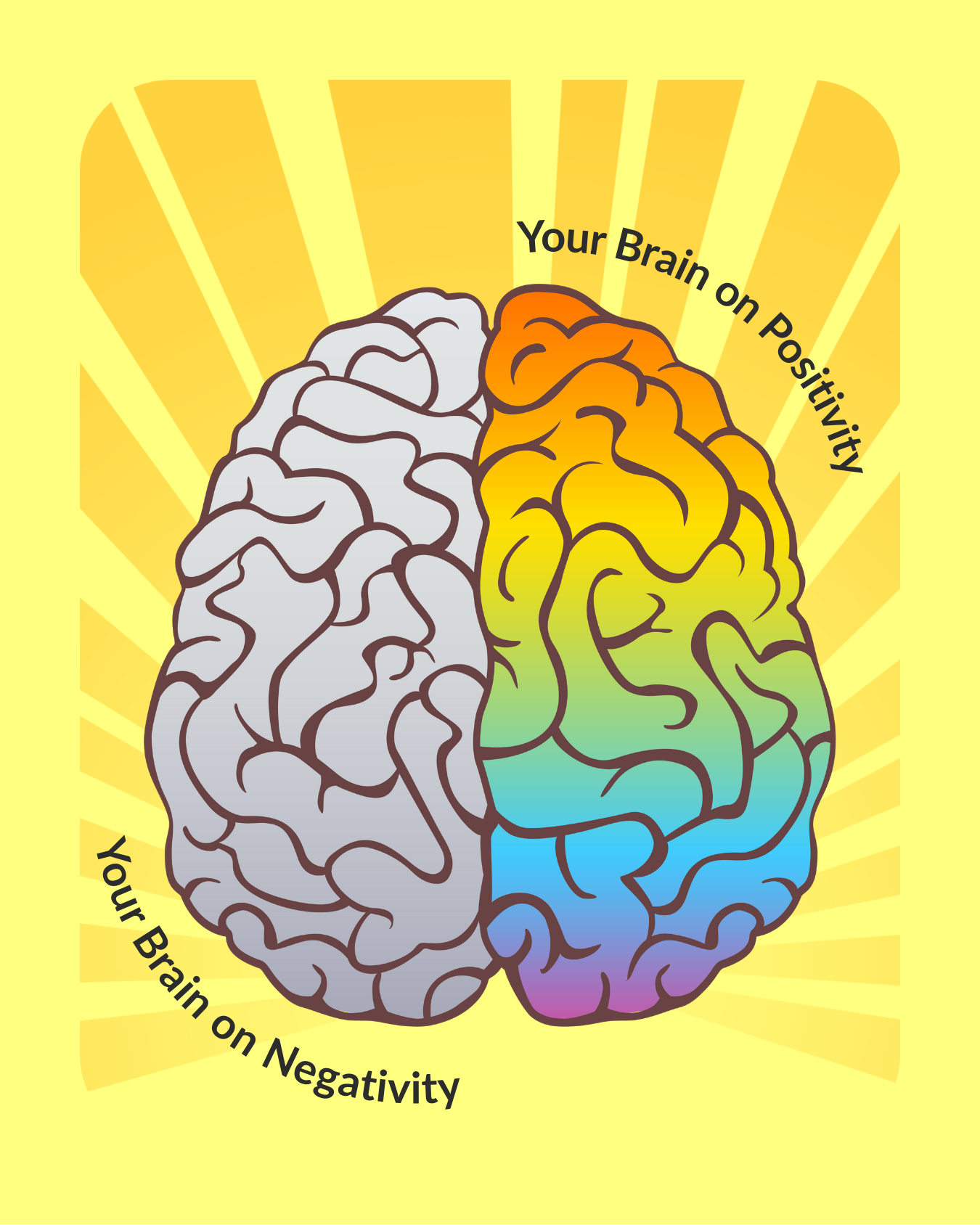
Research in positive psychology shows that when people experience positive emotions, like optimism, gratitude, or hope, their brains quite literally function differently:
Thinking becomes broader and more creative
Problem-solving improves
Learning accelerates
Stress responses soften
In studies highlighted by Shawn Achor, the author of one of my favourite books, The Happiness Advantage, professionals placed in a positive emotional state were:
Three times more creative
Up to 20% faster and more accurate in problem-solving tasks
A Gateway to Stronger Relationships
One of the most consistent findings across decades of research is this: High-quality social connection is the strongest predictor of well-being and long-term success.
When people feel psychologically safe and included, the brain releases oxytocin, a hormone that strengthens trust and regulates stress. This goes on to directly affect collaboration and resilience.
This is also why leaders who invest in positive relational moments, not just performance metrics, build teams that last.
Why Positivity Is a Leadership Skill
Positivity isn’t a personality trait reserved for a lucky few. It’s a skill that can be practiced and reinforced.
Barbara Fredrickson’s research on positive emotions shows that moments of positivity:
Expand perspective
Build emotional resources over time
Increase adaptability during change
In leadership, this shows up as:
Greater openness to feedback
More curiosity in conflict
Higher trust during uncertainty
In other words, positivity helps teams stay connected without disconnecting from reality.
What Positivity Looks Like in Practice
Positivity doesn’t require big programs or forced optimism. It shows up in our daily choices.
Leaders, you can practice positivity by:
Starting meetings with progress vs. problems
Recognizing effort and strengths, not only outcomes
Asking “What’s possible?” alongside “What’s wrong?”
Reframing from “I’m nervous or it’s hard” to “I’m excited for the opportunity”
Modeling optimism, especially when things feel uncertain
The Emotional Tone You Set Matters
Neuroscience also tells us that emotions are contagious. Our brains are constantly reading and mirroring the emotional signals of others, especially those in leadership roles.
This means that leaders not only set direction, but also the emotional tone for the workplace.
Bite-Sized Wisdom for Big Impact from Our Coaches

A Final Thought
Happiness may be the long-term outcome we hope for, but positivity is the daily practice that gets us there.
It’s built in conversations. In recognition, appreciation. In how we respond under pressure.
When leaders choose positivity, intentionally and consistently, they create cultures where people can flourish.
With optimism,
Jillian & Team
McLaughlin Mentoring Inc.